
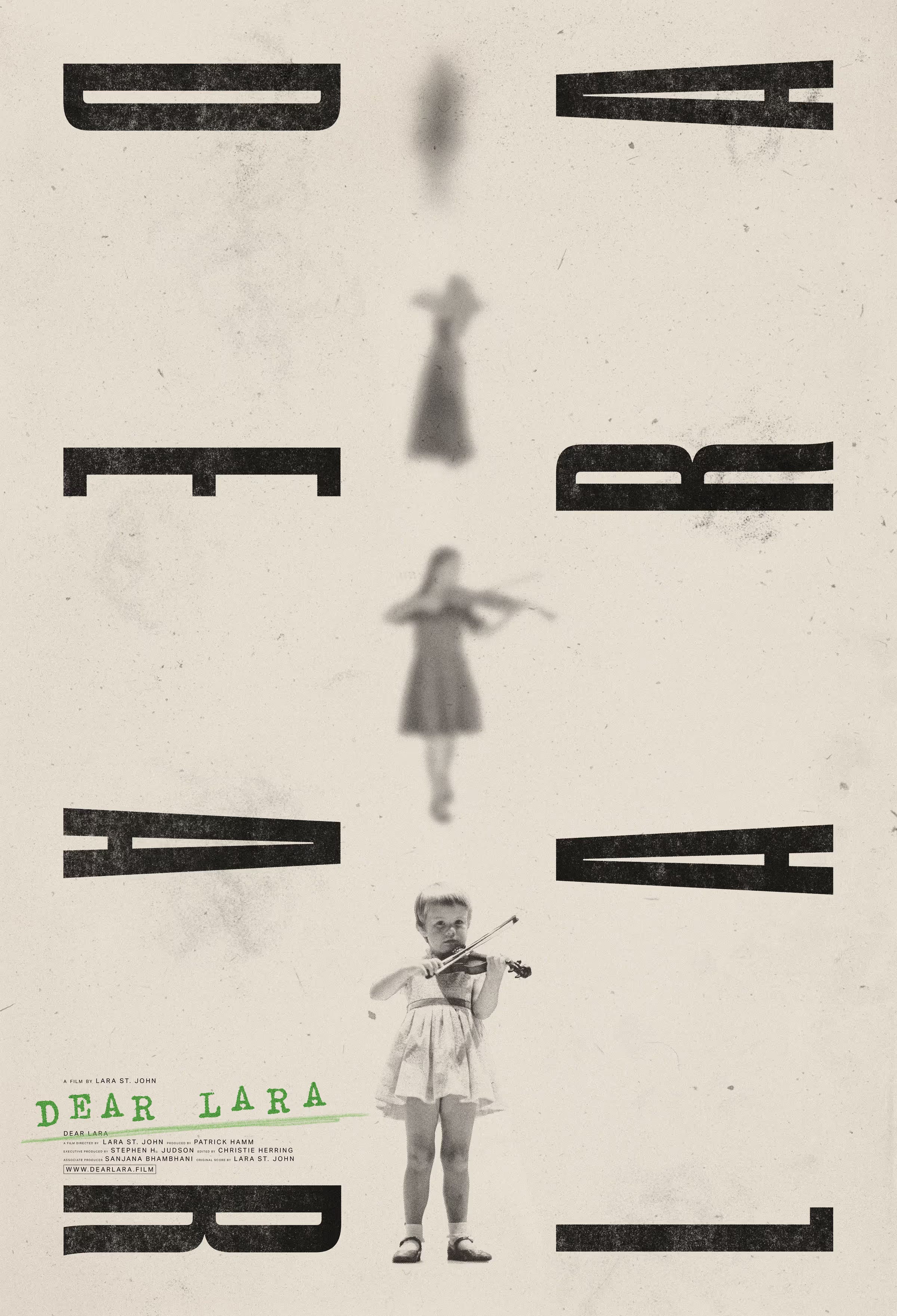
Wednesday night, May 13, 2026, I attended the Baltimore premiere of the documentary “Dear Lara.” I knew this would not be an easy movie to watch but I felt it was important to be there and bear witness. Violinist Lara St. John was a child prodigy and has an impressive solo career but this film was born out of abuse she experienced while she was a 14 year old student studying at the Curtis Institute of Music. When she spoke out about it years later in a series of articles in the Philadelphia Inquirer, it brought this issue to the fore. Suddenly, she was inundated with correspondence from other musicians who had been abused, who had tried to speak out about it and were written off. She was shocked by how many responses she received. Not having any experience with documentary filmmaking, she decided to record and film the interviews and with a small support team, made the movie on her own. With the professional schedule that she has, I am so impressed with the quality of the movie, the editing, and how it is compiled. The music is also exquisite, she plays on most of the soundtrack.
Before delving into the movie, I want to talk about life as a music conservatory student. Let me be clear, I never experienced sexual abuse, but I did experience a great deal of emotional manipulation. For people who aren’t musicians, it is assumed that a conservatory is just like a college experience only with a focus on music. Yes, you take required classes and have to perform a senior recital, those are the necessary credits, but the big difference is that you work one on one with your specific assigned instrument teacher at least an hour a week in their studio. These lessons focus on technique, coaching, style, and phrasing, for example. It is just you and your teacher, although sometimes an accompanist will be brought in for half of the lesson if you are preparing a recital or performance. As a young musician, this is one of the most important and formative relationships you can have.
Most students who are accepted into a music conservatory have already worked one on one with a teacher so working that way is not unusual. Music conservatories are competitive, particularly in the more prestigious institutions. A young music student is driven by the love of music and the love of their instrument, they have the passion to practice for hours and want to excel. Having been a singer at a conservatory, it was different, I couldn’t practice for hours like the instrumentalists did so I took in more of the environment. I watched many of my friends practice for hours, especially the pianists. The thing we all had in common was working one on one with our teachers each week.
This is a unique relationship and requires trust, trust from the student and trust from the teacher. You are alone with each other. As a student, you are the most vulnerable you can be because the language of music speaks from the heart and soul plus you are young, you don’t know what is too much and that’s where a teacher can help you develop skills that work best for you. There are many great teachers out there, teachers who understand and honor each student, helping them achieve their goals and blossom as instrumentalists and musicians. However, there are teachers out there who abuse students and it is easy to do in such a scenario. A student didn’t have much recourse in a conservatory, especially in the past. There are no witnesses, it is just their word against a teacher. If the teacher is famous and well-respected, that dichotomy is more enhanced and students suddenly drop out or disappear or even worse, commit suicide. Many leave music, the greatest love of their life, because it is too painful to bear, while the teacher continues on without any restriction. For anyone who has followed how abuse works, for instance in a church or school setting, it is the same thing. A young person is groomed, often threatened, and forced into a horrific situation without anyone to turn to. That’s what an abuser does, they isolate you so they can keep taking advantage.
Canadian Lara St. John was accepted into Curtis Institute of Music at the age of 13, along with her older brother. Their mother stayed with them for a short while but had to go back to Canada for health reasons. That left Lara and her brother alone without any adult support. At 14 and 15, Lara was abused and raped by her teacher, Jascha Brodsky, who was 78 years old. She said she had to set aside her weekly allowance of $15 to buy a pregnancy test. Since she and her brother both studied with him, Brodsky used that as a threat to make her comply. She went to the dean to file a complaint and the dean basically told her that no one would believe her, so did she want to switch teachers? It amazes me that she made it through, she switched teachers because that was her only option, and then went on to study in Moscow and have a solo career. Brodsky, who taught many influential violinists, died heralded in 1997 at the age of 90.
Why does someone who has been abused speak up about it so many years later? Someone dear to me told me towards the end of his life about abuse he had suffered as a 14 year old by the local priest, he had never spoken of it. At the time, he had no one around to help him and the priest took advantage of that. It was a horror story. He had no one to tell, he felt ashamed, and there was no one to help him. He found a way to get out of it and went on with his life. It remained locked up inside until years later when all the abuse was reported by the church diocese and in the newspaper and he saw himself in the victims. I remember him weeping when he told me his story. I was appalled and infuriated for him but I listened and I understood his childhood perspective.
Lara St. John interviews several people who had abusive situations in the music world and of course, they are all awful to hear. Most took place by teachers, whether in the music studio or being pursued by them. One was a young man who was drugged by a famous musician and woke up to find that he had been raped. These people were predators and they preyed on young people because they knew they could get away with it. The worst stories were of young musicians who were abused and then committed suicide. As a musician and a human being, my heart was heavy.
The movie also spends time with former Washington Post music critic Anne Midgette who has come out as a strong ally. She found herself unable to write music reviews on famous people in the classical music world who were abusers and left the paper due to the vitriol. The “shut up and deal with it,” “that’s how it’s always been,” “why are you bringing dark attention to the arts?” And that’s being kind, she was heaped with a lot of verbal abuse and misogyny. There was also an interview with Baltimore Symphony principal oboist Katherine Needleman who continues to deal with fall-out after reporting inappropriate behavior from the former concertmaster. She is an advocate for women in the classical music world and reports almost daily on the misogyny that is prevalent in orchestras, schools, and music festivals. Having been in the field, she is spot on. All three of them spoke at the short talkback after the movie. I didn’t get to speak with Lara or Anne, but I did speak with Katherine to offer my support and encouragement to keep doing what she is doing.
It is hard to hear so much grief, rage, and horror that was set aside because no one helped. Speaking as a yoga therapist, this would sometimes happen with a student in class. I wouldn’t necessarily hear the story, but I knew because I saw it in how they took in my instructions vs. everyone else in the class. I gave them a lot of space to be where they needed to be. However, it is exhausting to have many people like that, and I do worry about Lara having to carry so many horror stories as well as her own. That is a heavy burden and I hope she knows how appreciated and loved she is. She is a survivor and brave enough to represent those who have felt they weren’t heard. To make a film like this, to look at it in the face, to make others look at it, takes incredible strength. These three women standing afterwards in front of the crowded theatre last night gave me hope because they are representing how we need to move forward: acknowledge, grieve, inform, and strengthen, and from that grows awareness and accountability. “Dear Lara” is a feat of honesty, resilience, and the love of music.
.
As a product of one of the generations where this was widespread, it’s still mildly jarring to see it referred to as abuse. Of course it is abuse — but that’s how well-trained we were to accept it as part of “paying your dues.”
Thank you, Marianne, it is sad but necessary to bring this to light.